Explainers
Articles
Every article writes the formula out in full, names the governing body and version year the numbers come from, and links the calculator that applies it. No news, no predictions, no betting.
Each explainer is structured the same way: the concept is defined first, then the exact formula or algorithm is stated, then a worked example is walked through step by step. Where relevant, the article includes a reduced-count table, benchmark bands or comparison chart. Every article ends with a “What it does not tell you” section that states the limits of the calculation honestly, a Frequently Asked Questions section, and a cited source list linking to the governing body’s published document. Articles are reviewed by the ScoreIndexer Editorial Team and updated when governing bodies release new coefficient sets or rule editions.
Golf handicapping
 Golf
Golf
How is a golf handicap calculated?
Score differentials, the lowest 8 of 20 rule and the reduced-count table, with a worked example.
 Golf
Golf
What is a score differential in golf?
The formula that normalises a round for course difficulty, Slope, Course Rating and PCC.
 Golf
Golf
Course Handicap vs Handicap Index
Why one is portable and one is course-specific, and how to convert between them.
 Golf
Golf
What is a good golf handicap?
Where your Index sits by skill level, with the numbers framed honestly and cited.
 Golf
Golf
What is the Playing Conditions Calculation?
The −1 to +3 daily adjustment, where it comes from and why you cannot compute your own.
GolfWhat slope rating actually means
Relative difficulty for a bogey golfer, the number 113, and why it is not about hills.
GolfNet double bogey explained
The per-hole maximum for handicap purposes: Par + 2 + strokes received, with a worked example.
Running & racing
 Running
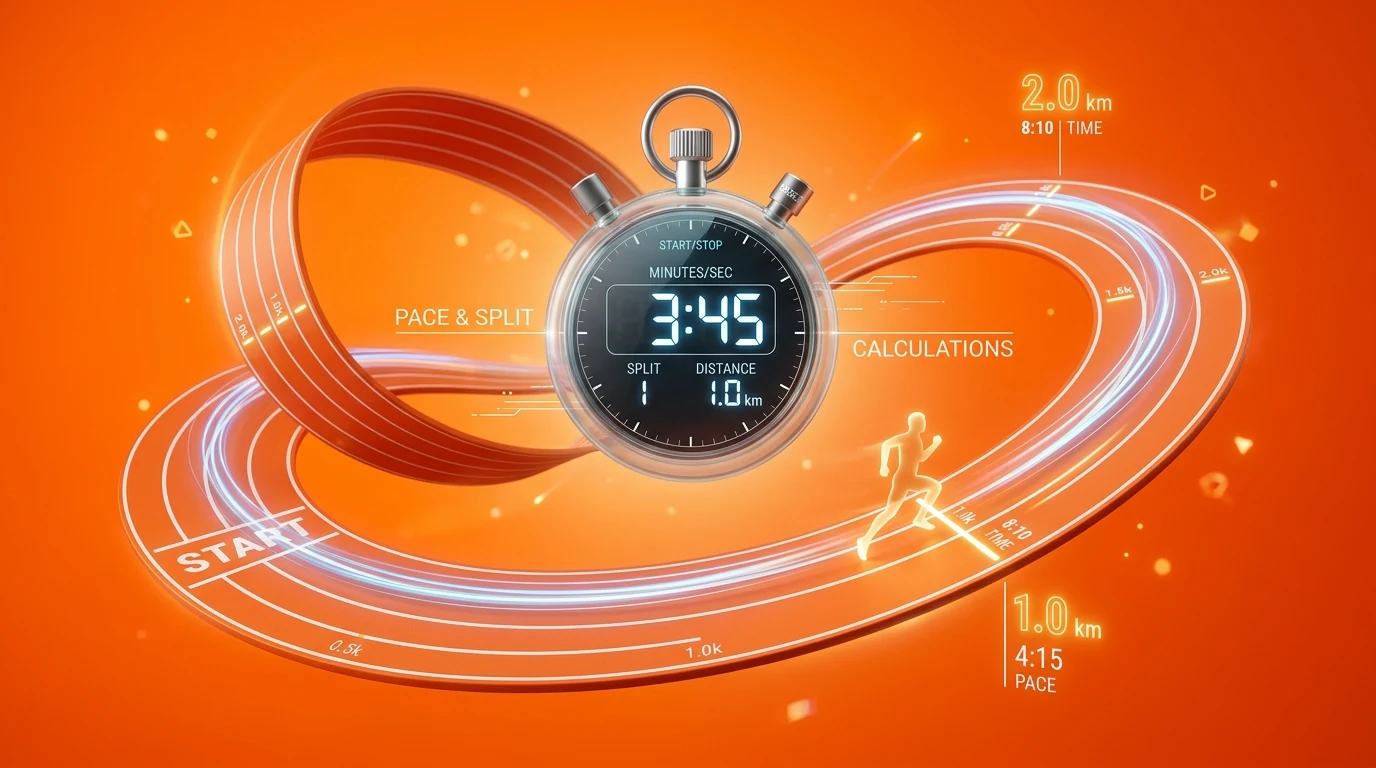
How to calculate running pace
Pace, speed and finish time from first principles, in metric and imperial.
 Running
How accurate is the Riegel predictor?
Where the 1.06 exponent came from and the distances it breaks down over.
 Running
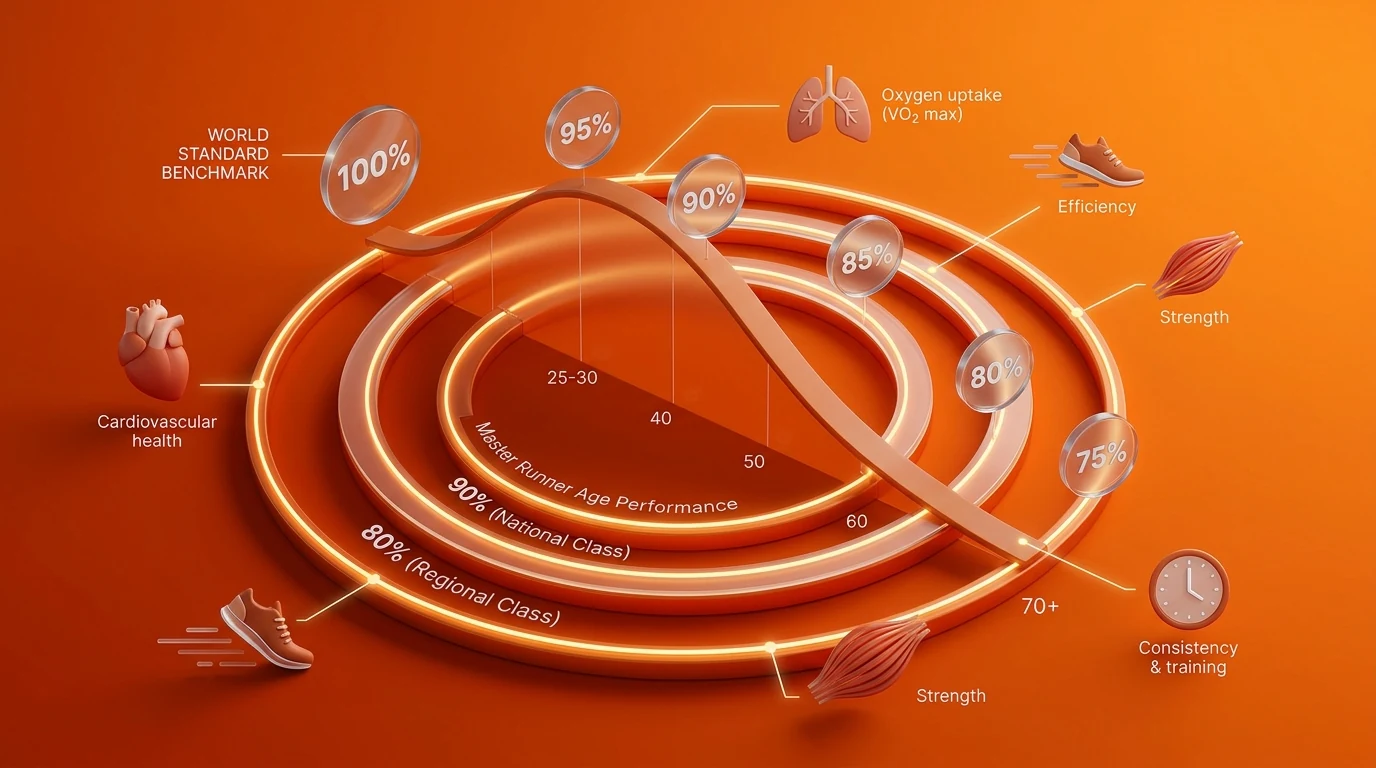
How age grading works in running
Age factors, age-graded percentage, and why sites using different table years disagree.
RunningMarathon pace chart by finish time
A full pace table from 3:00 to 5:00 finishers, in min/km and min/mile.
RunningHow to convert min/km to min/mile
The exact 1.609344 factor, worked examples and a full conversion table both ways.
RunningRiegel vs VDOT: which to trust
A power law versus an oxygen-cost model, how they differ and where both break down.
Strength scoring
 Strength
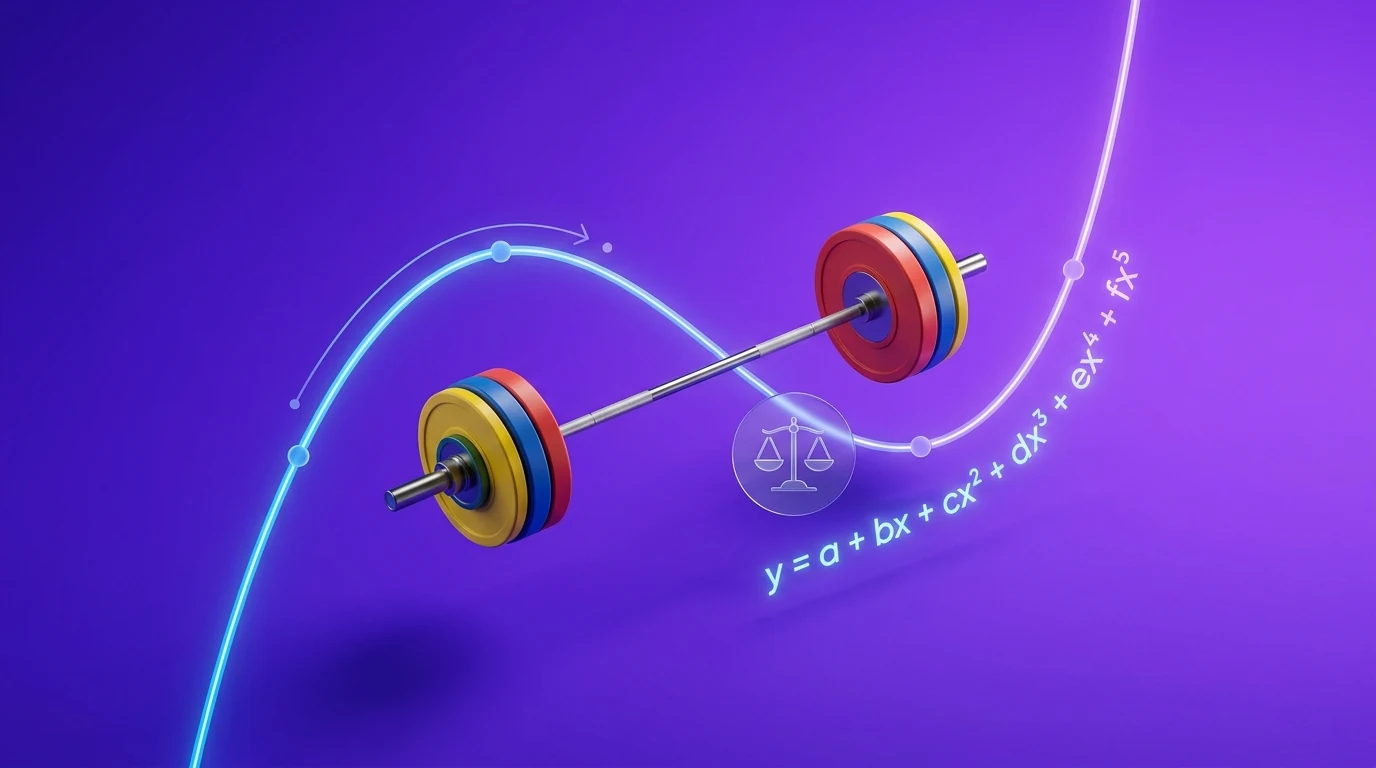
How is a Wilks score calculated?
The 5th-degree polynomial coefficient, the formula and a worked example in kg.
 Strength
What is a good Wilks score?
Community benchmark bands, framed as context rather than an official classification.
 Strength
Wilks vs DOTS vs IPF GL points
Three published systems, why they disagree, and which one your federation uses.
 Strength
How to estimate your one-rep max
Epley, Brzycki and Lombardi side by side, with the spread as the error band.
StrengthIPF GL points explained
The exponential formula the IPF adopted, its coefficients by class, and what it compares.
StrengthWhy Wilks was revised
What changed with the revised coefficients and why a score only compares within one version.
Swimming
 Swimming
How to read a swimming points table
Base times, the cube relationship, and why 1000 points is not a world record.
SwimmingHow World Aquatics points are based
The cube formula, what the base time is, and why the table year always matters.
SwimmingSCM, LCM and SCY course differences
Why pool length changes your time and why times and points are not comparable across courses.
SwimmingWhat a 1000-point swim means
The reference standard for the table year — what it is, and what it is not.
Cricket scoring
 Cricket
What is net run rate in cricket?
The ICC definition, decimal overs, and the bowled-out rule most calculators get wrong.
 Cricket
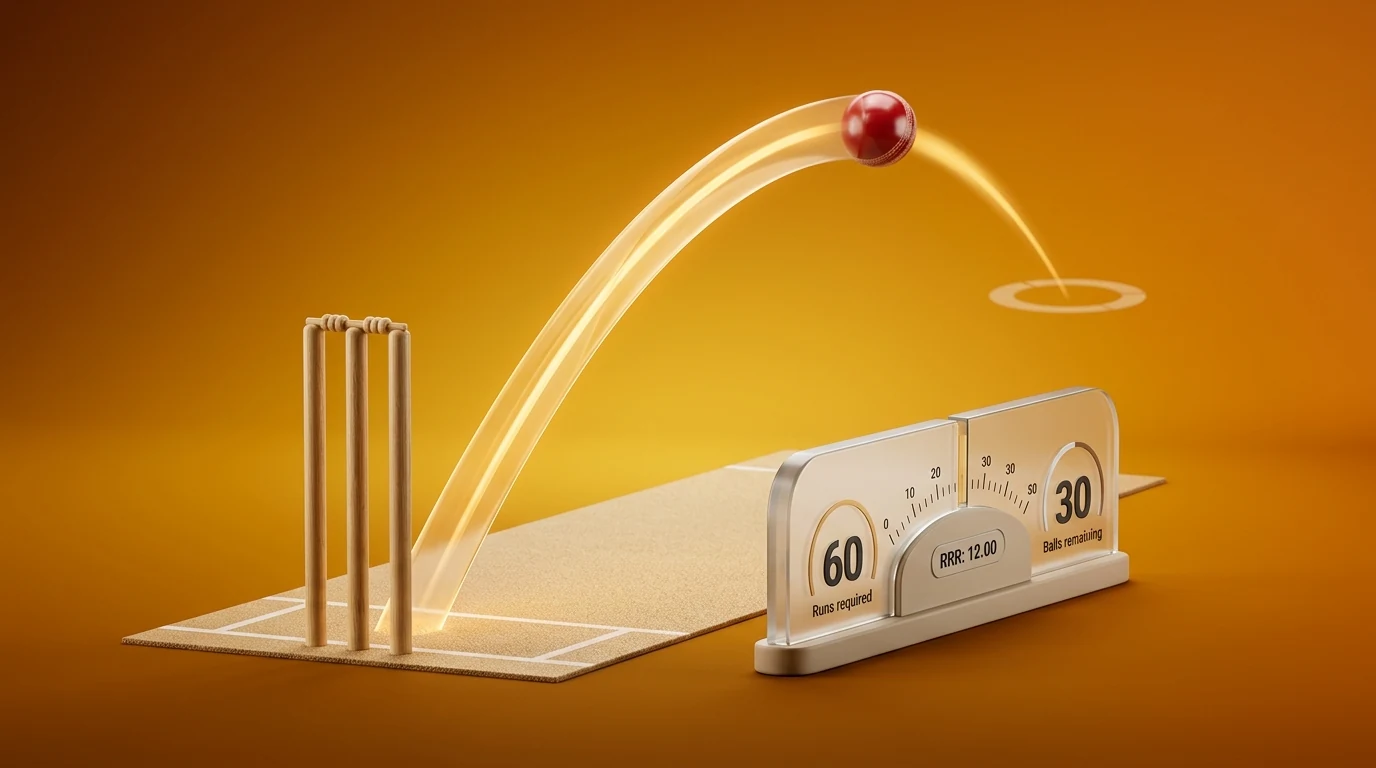
How required run rate is calculated
Target, runs needed and overs remaining — framed as arithmetic, never a prediction.
CricketHow overs convert to decimals
Why 45.3 overs is 45.5 in decimal, and why the ball digit trips up run-rate maths.
CricketWhy DLS is not a run-rate calculation
What Duckworth–Lewis–Stern does with wickets and overs, and why we reference but never compute it.
Endurance data (cycling & rowing)
Power-to-weight explained
Why W/kg matters on climbs, FTP-relative vs sprint watts, and the approximate tiers.
EnduranceFTP zones and what they reference
The seven Coggan zones, what each one trains, and why zone models disagree.
EnduranceEstimating speed from power
The physical model, why CdA dominates on the flat, and the honest ±5–10% error band.
EnduranceConcept2 watts and split explained
The 2.80 constant, a worked 2:00 split → ~203 W, and why it is not on-water speed.
Racquet & scoring systems
Standards & benchmarks
How scoring tables get revised
Why coefficients and base times change, and how to tell which version a calculator uses.
StandardsHow USBC bowling handicap works
Basis, percentage and the truncation-not-rounding detail most calculators get wrong.
StandardsSports unit conversion reference
Exact factors for distance, mass, pace, speed and temperature used across the site.
No articles match that search. Try a sport or a calculation name.